
✍️ We Didn’t Lose Those Jobs. Our Economy Moved Them.
The real challenge is not blaming other countries. It’s deciding what kind of economy we’re willing to help build.

We often hear that American jobs were “lost” to China, Mexico, India, or other countries. The language makes it sound as if those jobs simply disappeared, carried away by forces beyond anyone’s control.
Today, that story is retold as payback: Other countries took our jobs, and tariffs are how we strike back.
It’s a powerful political message because it creates a visible target: foreign governments and foreign companies.
But that framing misses a harder truth. In many cases, the decision to move production was made by U.S. companies themselves, often with the support of investors, trade policies, and consumers who welcomed lower prices.
Over the past several decades, U.S. companies have made deliberate decisions to shift manufacturing and production overseas. Sometimes they built their own facilities abroad. More often, they contracted with foreign companies to make the products Americans buy every day—from electronics and clothing to household goods and auto parts.
They did it for reasons that made business sense: lower labor costs, fewer regulations to protect workers and the environment, established manufacturing hubs, and easier access to materials.
There was also relentless pressure to keep prices low in a highly competitive marketplace.
Many of us, me included, accepted and often benefited from those lower prices. We filled our homes with less expensive goods, many labeled Made in India, Made in Vietnam, Made in Mexico, or Made in China.
Retailers built entire business models around affordability, convenience, and constant availability. Investors rewarded companies that improved margins by reducing production costs.
In other words, this was not just a corporate decision. It became part of a larger economic system that companies, policymakers, investors, and consumers all helped reinforce.
That is why tariffs alone cannot solve the problem.
With the one-year anniversary of Trump’s April 2 “Liberation Day” tariffs approaching, this is a useful moment to ask what those tariffs changed—and what they never could.
They do not automatically rebuild the factories, workforce pipelines, supplier networks, and infrastructure that once supported domestic production. They do not reverse decades of decisions that made overseas production the default choice for many industries.
Instead, tariffs often shift the immediate cost of imported goods to the people standing closest to the cash register: consumers and small businesses.
But as a broad promise to “bring jobs back,” they often ask for a tax policy to solve a structural problem.
The deeper issue is not simply where products are made. It is how we built an economy that rewarded moving production elsewhere in the first place.
That raises harder questions than campaign slogans usually allow:
What should the government do to rebuild domestic supply chains, infrastructure, and worker training?
What responsibility should companies bear when they choose short-term savings over long-term economic resilience?
What responsibility do consumers share when lower prices come with hidden costs to local jobs and community stability?
Those are not easy questions, because changing course may mean paying more for some goods, at least in the short term.
Someone always bears the cost. The question is whether we are honest about who.
That does not mean ignoring unfair trade practices or neglecting industries that matter to national resilience. It does mean recognizing what tariffs can and cannot do.
It also does not mean returning to the industrial economy that the United States once had. That world has been transformed by automation, technology, and global supply chains.
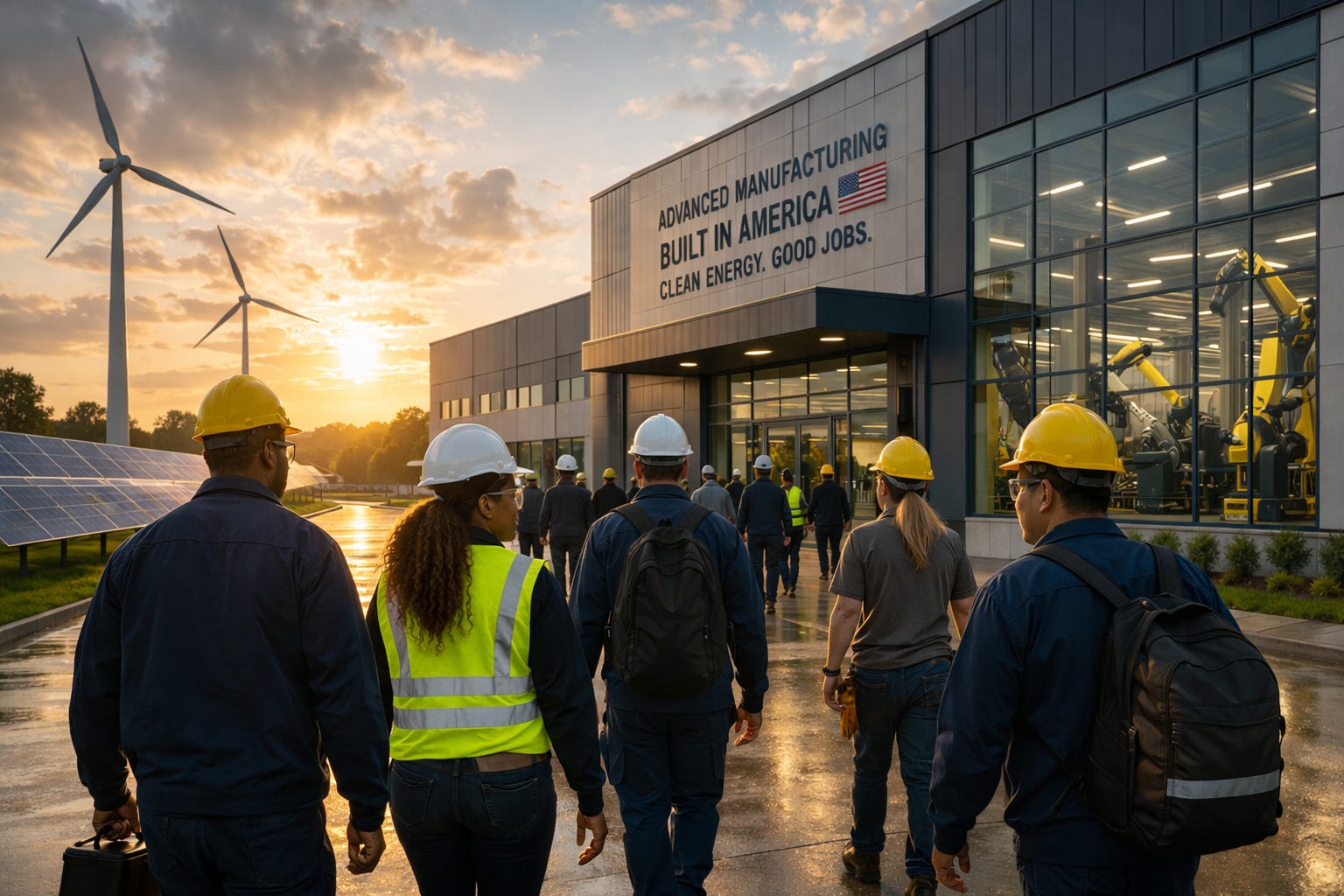
But it is realistic to rebuild key domestic industries, strengthen regional supply networks, and create modern, stable opportunities for workers in manufacturing, infrastructure, clean energy, and advanced logistics.
Getting there requires long-term investment in people, worker training, modern transportation, and environmental protection. It means supporting policies that make domestic production practical, sustainable, and not merely symbolic.
And it may also require something from the rest of us: a willingness to think beyond the lowest price tag.
That is the part we do not talk about enough.
The real question is not who to blame. It is whether we are willing to help build an economy that creates stronger opportunities for American workers, job seekers, and communities.
Related reading
Tariffs Don’t Bring Jobs Back—or Lower Prices
How tariff costs often land on consumers and small businesses while doing little to rebuild domestic industries, July 9, 2025.