
🔤 Multilingual Writing: Why This Matters
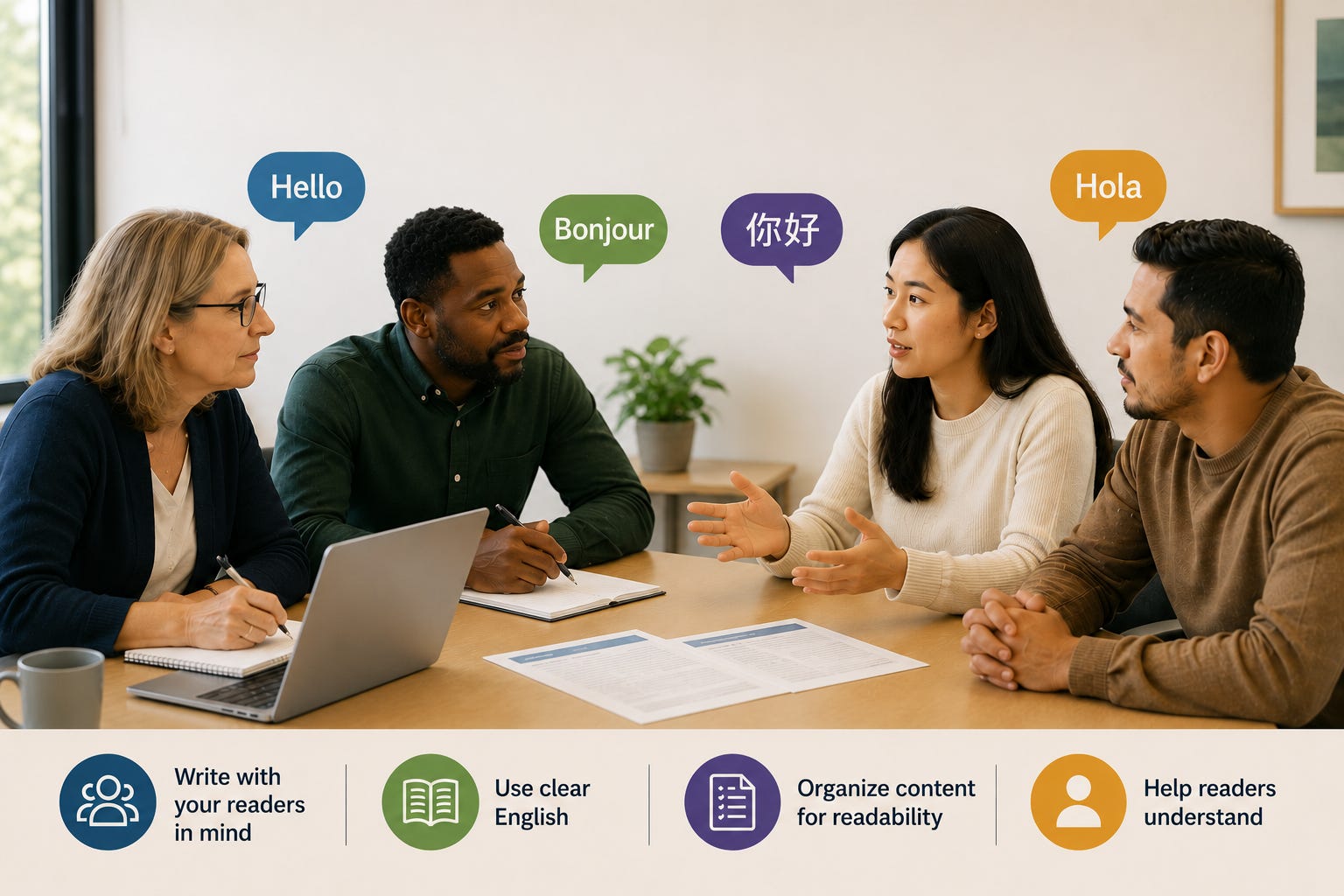
Writing for multilingual readers and translation is not only about words. It is about access.
Introduction | Why This Matters | Plain Language | Readers | Sentences | Words | Consistent Terms | Design | Translation Prep | Machine Translation | Review | Checklist
Access means more than putting information somewhere people can find it. People must also be able to understand it, trust it, and use it. A bus schedule people cannot understand is not fully accessible. A public notice people cannot use is not fully public. A form that confuses people who need a service can become a barrier instead of a bridge.
Language access has deep roots
Immigration has been part of the United States from the beginning. The Declaration of Independence included a complaint that the king had obstructed naturalization and discouraged migration to the colonies. That sentence does not settle today’s immigration debates. But it does show that immigration, belonging, and the country’s growth were part of the American argument from the beginning.
That connection still matters. Immigrants continue to bring skills, knowledge, work, culture, family, and civic energy to the country. Some people come to stay. Some come to study, work, visit, or build relationships across borders. Some use English every day. Some are learning it. Some rely on translated or interpreted information. All of them may need accurate, respectful, and usable information in English.
Clear English helps people use English
Helping people understand English-language information does not weaken the value of learning English. It helps people use English in daily life—at work, at school, in public services, and in their communities. It also helps public agencies, schools, businesses, nonprofits, and community organizations communicate better with people who use languages other than English or who need translated or interpreted information.
What I saw in county government
I first saw this connection while working in county government communications. Public agencies needed to provide useful information for people with limited English proficiency. That work included translation, interpretation, language access, and practical guidance for staff who created public information. For public agencies and many organizations, meaningful language access is both a legal responsibility and a practical necessity.
Transit made the issue especially concrete:
People use transit information to get to jobs, schools, medical appointments, public offices, grocery stores, community events, and home.
Not every timetable or rider notice needs to appear in multiple languages.
Routes serving neighborhoods where many riders use a language other than English may need translated information.
Translated information can make transit service more useful and more respectful.
My interest was direct. I recommended plain English: shorter sentences, familiar words, useful headings, and enough explanation for people to act. If government communicators wrote clearly and concisely from the start, their materials would be easier for multilingual readers to read and easier for translators to translate accurately.
Unclear English makes everyone else work harder: readers, translators, interpreters, reviewers, teachers, customer service staff, and the people trying to use the information.
What I saw through English teaching
I saw the issue from another angle through my wife’s work as an ESL instructor after she retired from public school teaching. Many of her students were immigrants. They wanted to learn English so they could function well in daily life, work, school, community settings, and civic life. Many also wanted to understand U.S. customs and local expectations while continuing to value their own languages and cultures.
In another setting, Donna’s English learners had different goals. Some were visitors, students, workers, or professionals who would use English across borders. They might return to their home countries with stronger English skills, broader cultural knowledge, and new connections.
Their needs are not the same as those of immigrants building permanent lives here, but the communication principle was similar: Plain, direct English helps people understand one another with less confusion and more respect.
Clear writing cannot solve every language barrier. Translation, interpretation, language access, cultural knowledge, and human judgment are still necessary. Machine translation may help in some situations. But it cannot replace careful writing, qualified translators, or meaningful review when the information affects people’s rights, safety, health, education, work, benefits, transportation, or public participation.
Clear writing is a starting point
Clear English helps:
Writers say what they mean
Readers understand what they need
Translators and interpreters carry meaning across languages
Public agencies, schools, businesses, nonprofits, advocates, and communities serve people with more respect and less confusion
Confusing English creates barriers that do not need to exist. Writers should not leave readers, translators, or interpreters to repair problems the writer could have prevented.
Introduction | Why This Matters | Plain Language | Readers | Sentences | Words | Consistent Terms | Design | Translation Prep | Machine Translation | Review | Checklist