

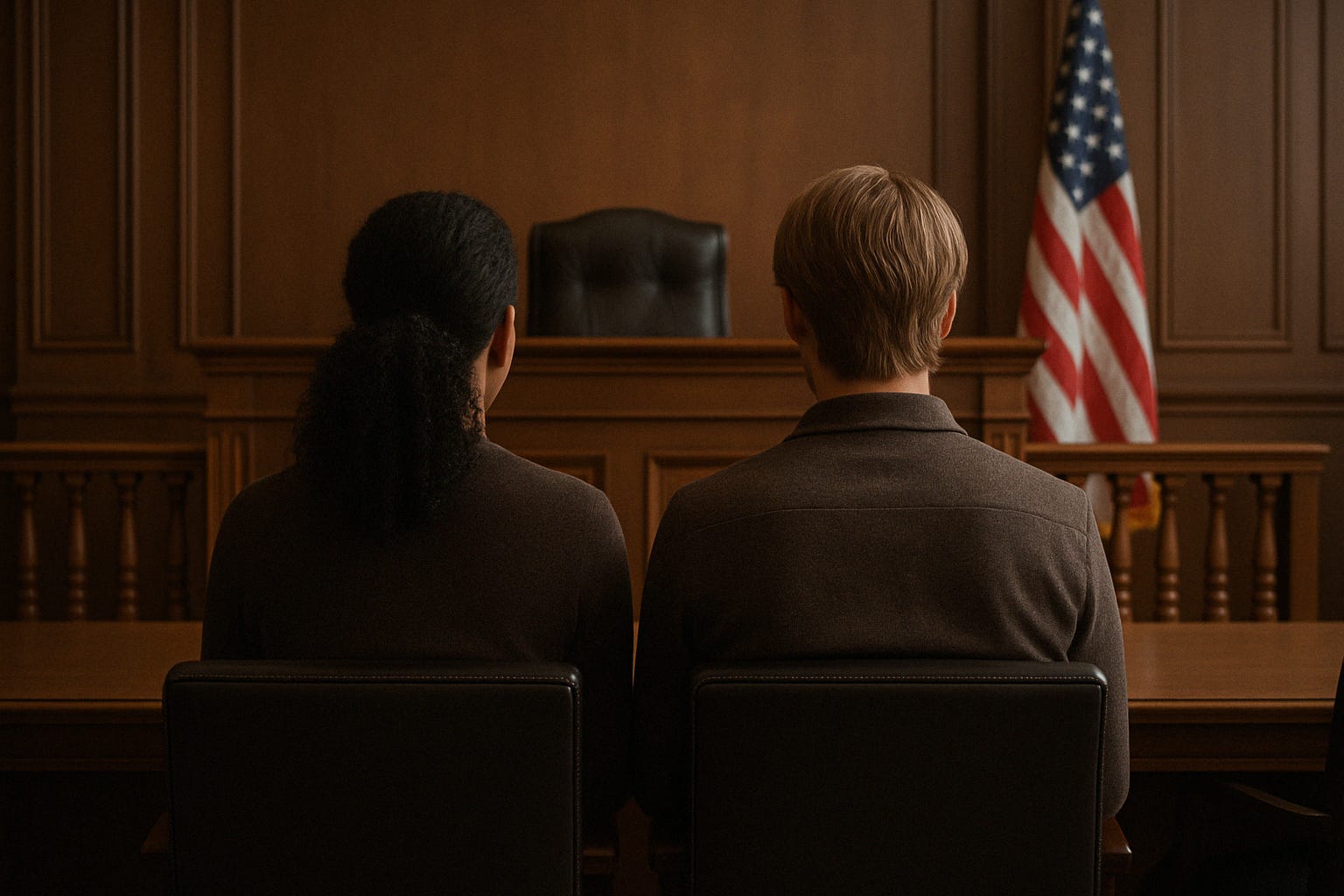
“Due process.” You’ve likely heard those words a lot lately—especially in the troubling case of a U.S. resident locked up in an El Salvador prison without access to a lawyer, a court hearing, or any public explanation.
But what does due process mean? And why should it matter to you, me, and every person who lives under the protection of the U.S. Constitution?
A Safeguard Rooted in History
The founders didn’t invent the idea of due process, but they made it a cornerstone of U.S. democracy.
Drawing from centuries of English legal tradition, including the Magna Carta of 1215, they had seen what happens when rulers abuse their power without accountability.
Having lived under the unchecked authority of the British crown, they wrote protections into the Constitution to ensure no government—federal or state—could deprive people of life or liberty without fair and open procedures.
Due process, then, is not just a legal formality. It’s a hard-earned safeguard against tyranny.
How It Protects All of Us
At its core, due process is a safeguard against government abuse. It’s the idea that no one—not even the most unpopular person—can be punished by the government without fair legal procedures.
That means the right to be told what you’re accused of, the right to a lawyer, the right to a fair and open trial, and the right to appeal. In short, it means the government can’t just lock you up and throw away the key.
The Fifth Amendment says it plainly: “No person shall … be deprived of life, liberty, or property, without due process of law.” And the 14th Amendment echoes that promise to all people in every state.
These protections don’t just apply to U.S. citizens. They also apply to “persons.” That includes immigrants, residents, and, yes, people accused of crimes.
Not Just a Legal Loophole
This isn’t a fringe idea. It’s foundational. As Justice Felix Frankfurter wrote in 1943, “The history of liberty has largely been the history of the observance of procedural safeguards (1943).”
Or in the more stirring words of Justice Hugo Black (1956): “There can be no equal justice where the kind of trial a man gets depends on the amount of money he has.”
Too often, critics dismiss due process as a technicality—contending it's a loophole exploited by people accused of crimes to avoid punishment. But history—and recent headlines—show us how dangerous that thinking can be.
When governments start ignoring due process for the few, it’s only a matter of time before the rights of the many begin to erode.
If We Don’t Defend It, We Lose It
That’s why we must speak up. Defending due process isn’t defending lawlessness. It’s defending law itself. It’s standing up for a system that protects the innocent and holds the powerful accountable.
In our political activism and in our daily lives, we need to champion these rights—not just when they’re convenient or when they protect people we agree with but always.
Because the true test of a democracy isn’t how it treats the best among us. It’s how it treats the least powerful, the least popular, the most vulnerable.
Let’s remember what’s at stake. Let’s raise our voices for fairness, transparency, and justice. Let’s protect due process—for everyone.
Thank you 🥰🙏🏽❣️
Thank you for your clear explanation and the historical background. It's NOT a fringe idea!