✍️ When Did Monopolies Become ‘Efficient’?
Theodore Roosevelt believed capitalism depended on competition. Somewhere along the way, we forgot.

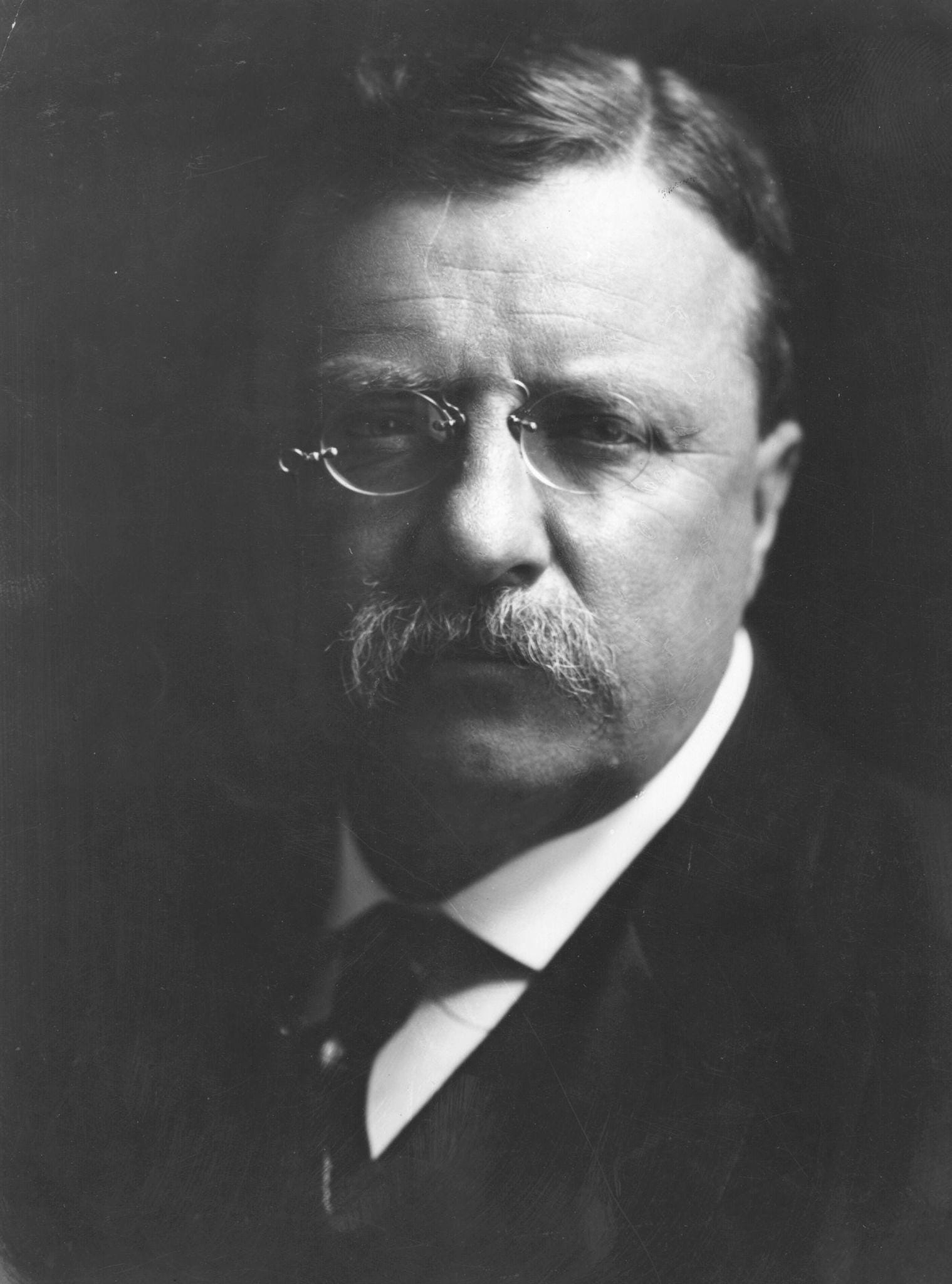
When I was in eighth grade, I became fascinated with one of America’s most energetic presidents, Theodore Roosevelt.
It was a turbulent time in American politics, in 1963-64, as I recall. My father, a union member and committed Democrat, sat me down one day to explain why government had to stand up to concentrated economic power.
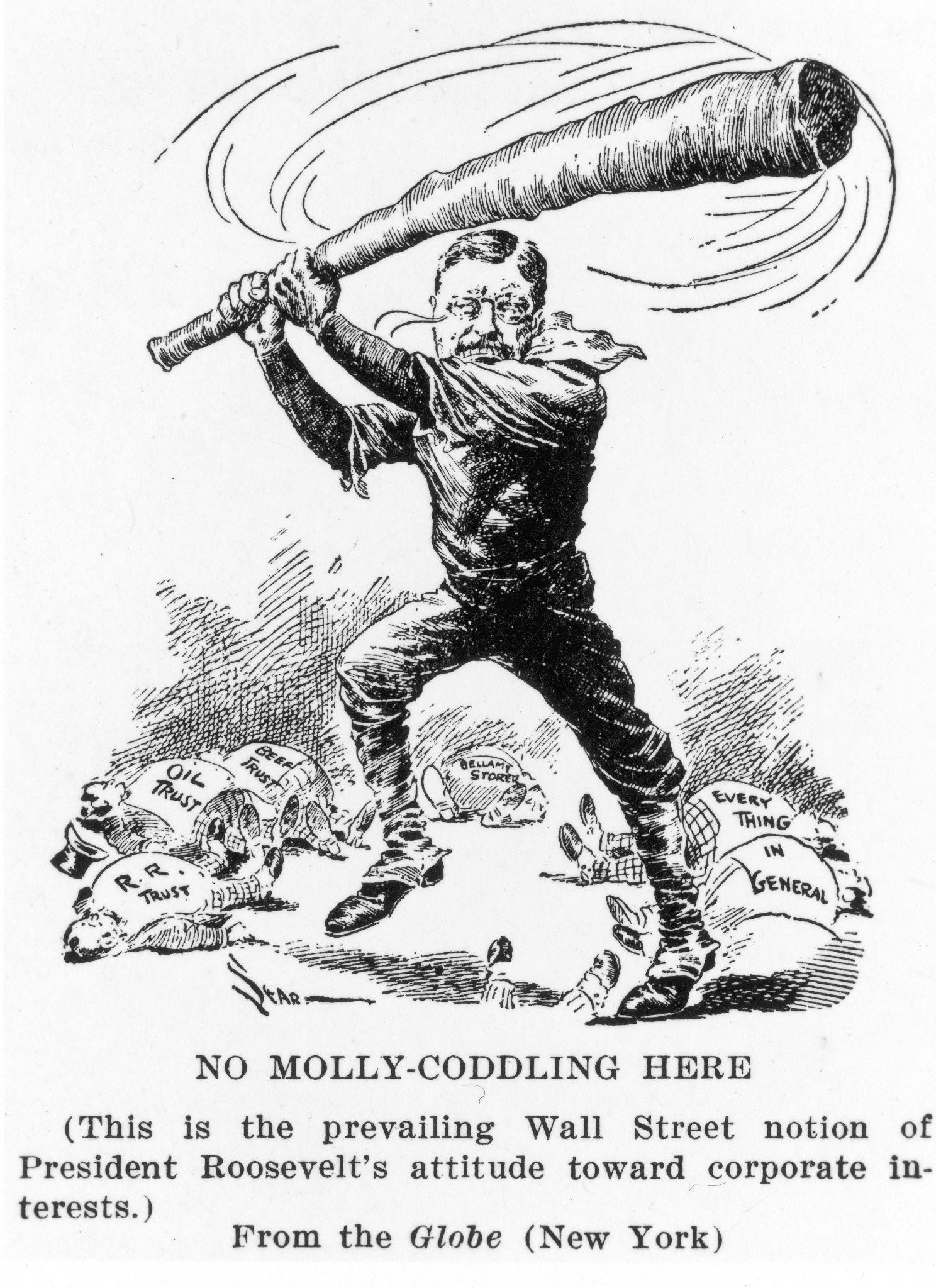
At about the same time, the previous owner of our house had left several books by Roosevelt. Already interested in U.S. history, I began reading them. I learned, among other things, about “trustbusting,” Roosevelt’s campaign against the country’s most powerful monopolies.
I had no idea that those books would influence how I think about the economy and democracy decades later.
A progressive Republican, Roosevelt was not hostile to business. He believed large corporations could do important things and spoke of distinguishing between “good trusts and bad trusts.” But he also believed that too much economic power in one place could threaten competition and democracy.
During his presidency, Roosevelt’s administration brought more than 40 antitrust cases, including a landmark effort to break up the powerful Northern Securities railroad trust.
Roosevelt argued that capitalism could remain healthy only if no single company dominated an industry.
As he told Congress in 1902, “Great corporations exist only because they are created and safeguarded by our institutions; and it is therefore our right and our duty to see that they work in harmony with those institutions.”
Regulating monopolies isn’t anti-capitalism. It protects the competition that capitalism depends on. And that benefits consumers, workers, businesses, and the economy.
For much of the 20th century, the concern about concentrated economic power remained part of American policy. Antitrust laws were used to challenge monopolies and limit mergers that threatened competition.
Competition matters not simply because it creates more businesses. It also matters because of what it produces for the public.
Economists have long observed that competitive markets tend to produce practical benefits:
Prices stay lower. Companies must compete for customers rather than charge what the market will bear. That’s why airline fares dropped when low-cost carriers entered the market, and why generic drugs dramatically reduce prescription costs once patents expire.
Companies work harder to improve their products. Businesses constantly look for better products and services to win customers. From smartphones to electric vehicles to streaming services, innovation often comes from companies trying to outdo one another.
Consumers gain real choices. Shoppers have real alternatives rather than standardized options. Not just more stores selling the same thing but offering different approaches, products, and ideas.
Service improves. Businesses must treat customers well when they can go elsewhere. Competition pushes companies to provide better customer service, better reliability, and better value.
Businesses have a chance to start and grow. Competitive markets leave room for new ideas and new companies. When several companies dominate an industry, it becomes much harder for small firms and startups to enter.
Workers have more job options. When several employers compete for employees, wages and working conditions tend to improve. When only a few companies control an industry, workers have fewer choices.
Communities have a stronger voice. Local businesses often respond more directly to community concerns about environmental protection, public spaces, and quality of life.
Over the past four decades, however, the nation’s approach to corporate concentration has changed. Beginning in the 1980s, policymakers started treating large mergers as efficient and even desirable, approving mergers if consumer prices did not quickly rise.
As a result, industries became more concentrated. And independent businesses disappeared:
Locally owned pharmacies have declined as large chains and pharmacy benefit managers dominate prescription distribution. Likewise, national chains have replaced neighborhood groceries.
Large media chains have closed or absorbed thousands of community newspapers. That has left smaller staffs, reduced local coverage, and advertising revenue redirected away from those communities.
Film production, distribution, and theaters that once showed independent movies are increasingly controlled by a handful of corporate entertainment firms.
Private equity investors have bought hospitals, nursing homes, and physician practices—often cutting staffing and services to boost profits.
In recent decades, the idea that competition required protection faded from public debate. Fewer corporations now dominate markets that once supported dozens of competitors.
When did we decide that concentrated economic power was efficient instead of dangerous?
Efforts to regulate monopolies are criticized as anti-business. In reality, they protect the competition that makes markets work.
When only a few companies dominate an industry, prices rise, innovation slows, and smaller competitors disappear. Competition—not concentration—is what keeps markets dynamic.
Freedom in a democracy is not only freedom from government power. It is also the freedom of people to act—to start businesses, publish newspapers, compete in markets, and take part in civic life.
When economic power becomes too concentrated, those opportunities shrink.
Roosevelt worried that concentrated economic power could threaten democracy. As he warned in 1910:
“The absence of effective State, and especially national, restraint upon unfair money-getting has tended to create a small class of enormously wealthy and economically powerful men.”
More than a century later, it may be time to ask again a question that once guided American policy:
How much economic concentration is healthy for a democracy?
Related Reading at Plainly, Garbl
The Wrecking of the Republic: When Profit Trumps the Constitution
How corporate power and the Supreme Court are rewriting democracy
Congress Has the Power to Regulate Industry and the Duty to Do It
The Constitution is clear: Congress must regulate industry for the public good. Tell them to do their job before it’s too late.