
🌟 Volunteer Pathways to Purposeful Engagement
Practical ways to get involved, help out, and stay human

Plainly, Garbl provides resources, tools, and reflections for people who care about truth, fairness, democracy, and political action. That matters.
But political action can be exhausting. Even activists need places to step back, reconnect, and engage with the world in other constructive ways.
You may be reading this because you’re thinking about volunteering—or thinking about thinking about it.
Maybe you need an alternative to political action. Maybe your children are grown or more independent. Maybe you’ve retired and have more time. Maybe you’ve moved to a new community and want to feel connected. Maybe a partner or spouse is no longer part of your life, and you’re looking for something meaningful to do.
Or maybe nothing dramatic has changed. You simply want to do something useful, meet people, share a skill, or engage with the world a bit more.
If so, thank you. Communities depend on people who are willing to show up. In times like these, it can help to remember that caring for communities takes many forms.
This guide focuses on volunteerism and community engagement outside partisan politics. It emphasizes participation over credentials, learning over expertise, and sustainability over burnout.
You don’t need a nonprofit background.
You don’t need to be an activist.
You just need an interest in being useful and human.
What This Resource Is For
This guide supports people who want to:
Get involved in their community, often locally and sometimes through broader networks
Volunteer in ways that align with their interests, skills, and energy
Contribute to community life in ways that support well-being rather than undermine it
Support volunteer efforts without becoming “a nonprofit professional”
It also supports people who find themselves:
Coordinating volunteers informally
Helping run a small organization or project
Wondering how to recruit, welcome, or keep volunteers without burning anyone out
How This Resource Is Organized
This resource moves from getting started to participating effectively to supporting others who volunteer. You can read it straight through or jump to the sections most relevant to where you are right now.
1. Getting Involved: Finding the Right Fit
For people who want to help but aren’t sure where to start
Getting involved doesn’t require a lifelong commitment. Many opportunities are flexible, short-term, or a way to try something new.
Practical guidance
Start with what you enjoy or care about—not what you “should” do.
Be honest about your time, energy, and limits.
Look for roles that fit life right now—your time, energy, and responsibilities.
Choose one-time or periodic volunteering if you’d like to start slowly. It’s valid and valuable.
Questions worth asking
How much time is really expected?
Is training provided?
Who will I report to or work with?
Can I step back if my situation changes?
Where to find opportunities
A local volunteer bureau
Libraries, museums, schools, and parks
Community nonprofits and service organizations
State or national organizations with local chapters
National volunteer-matching platforms. See the list below.
Volunteering takes many forms.
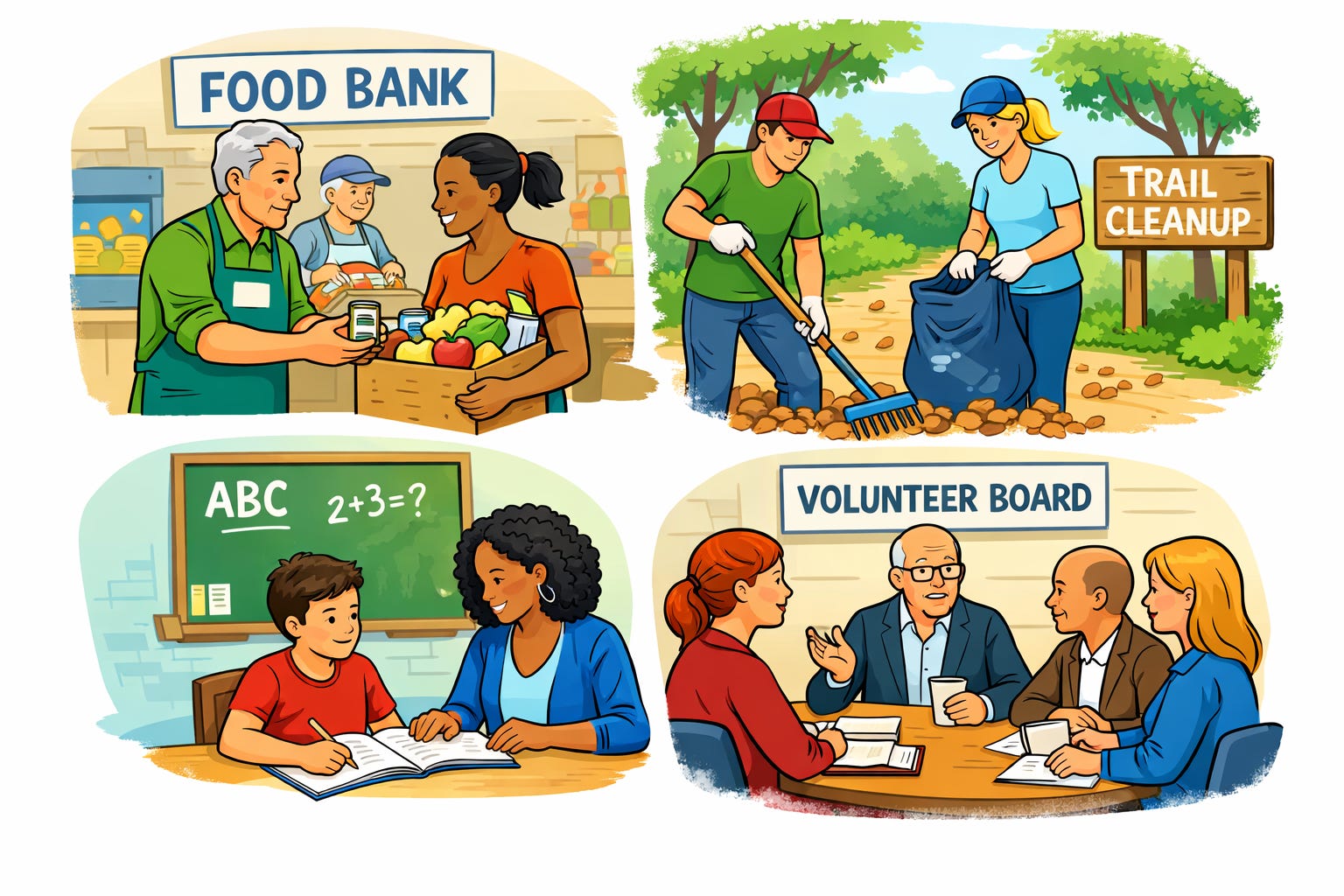
Some roles are hands-on and immediate—serving food, tutoring, cleaning up parks, helping at events, or working directly with individuals. Others are less visible but just as important, such as serving on boards or committees, helping with planning or finances, offering professional skills, or supporting organizations behind the scenes.
All of these count. The right fit depends on your interests, skills, comfort level, and how you want to engage with others.
Accessible online entry points
VolunteerMatch (now part of Idealist)
Connects people with volunteer opportunities based on location, interests, and availability. The site is easy to use, clearly volunteer-focused, and welcoming to first-time volunteers.Points of Light
A national network supporting volunteering and civic engagement, with local affiliates across the U.S. Offers ways to find opportunities, take part in service projects, and learn about community engagement.AARP Create the Good
Helps people find volunteer opportunities that match their skills, interests, and schedules. While created with adults 50+ in mind, the resources are helpful for anyone interested in meaningful, flexible volunteering.
2. Being an Effective Volunteer (Without Burning Out)
For people who want to contribute well—and sustainably
Being an effective volunteer isn’t about doing everything. It’s about showing up thoughtfully.
What effective volunteers tend to do
Arrive when they say they will.
Ask questions and listen.
Respect local knowledge and leadership.
Learn the organization’s norms before trying to change them.
Communicate clearly when circumstances shift.
What effective volunteers avoid
Overcommitting
Taking on responsibility they didn’t agree to
Trying to “fix” people or communities
Continuing only out of guilt, rather than because the work still feels meaningful.
Learning resources
NonprofitReady.org
Offers free, short learning modules on volunteering and nonprofit work. Some content is geared toward nonprofit staff, but many modules are accessible and useful for volunteers or people helping organize community efforts.Idealist—Volunteer Resources
Offers practical tips and inspiration for finding volunteer opportunities, setting expectations, contributing effectively, and volunteering sustainably.
3. Supporting Volunteer Efforts & Small Organizations
For people who suddenly find themselves helping organize others
This section is for people who didn’t plan to “run” anything, but they now find themselves helping coordinate volunteers, events, or small organizations.
This is not nonprofit management school. It’s about keeping things humane and functional.
Helpful practices
Clear expectations beat enthusiasm every time.
Helping people get started matters.
Expressing appreciation isn’t optional. It keeps people coming back.
Fewer volunteers doing meaningful work beats many who feel lost.
Recruitment basics
Be specific about what’s needed.
Be honest about time and limits.
Welcome short-term and trial participation.
Retention basics
Respect people’s time.
Offer feedback and gratitude.
Let people step back gracefully.
Accessible tools and guides
Energize, Inc.
Provides practical advice on recruiting, supporting, and retaining volunteers. Especially helpful for people who find themselves coordinating volunteers without formal training.HandsOn Network
Supports volunteer engagement through local affiliates and national initiatives. Offers tools and guidance for organizing volunteer efforts at the community level.TechSoup
Helps nonprofits and community groups access technology, tools, and support. Particularly useful for small or volunteer-run organizations looking for practical help.
Volunteering matters …
Volunteering is one of the simplest ways people care for the places they live and the people around them. It shows up in food banks and libraries, schools and shelters, arts groups and environmental projects, neighborhood efforts and quiet acts of service that rarely make headlines.
And it matters in another way, too. Volunteering can bring purpose, connection, and a sense of usefulness at times when those things feel harder to come by. It’s a way to give back—and often, to get something back as well: perspective, belonging, and the simple satisfaction of doing something that feels right.
Not every form of civic engagement looks like activism. Sometimes it looks like showing up, helping out, and staying human.
That work counts.
🌟 Related Resources
Activist Resilience and Emotional Support
Stay grounded, connected, and well while working for change
If this resource resonates with you, please share it with friends.
Get new posts from Plainly, Garbl delivered to your inbox.