
✍️ The ‘Other Washington’ Is Closer to Home
Federal politics gets the headlines. State and local government shape much of daily life.

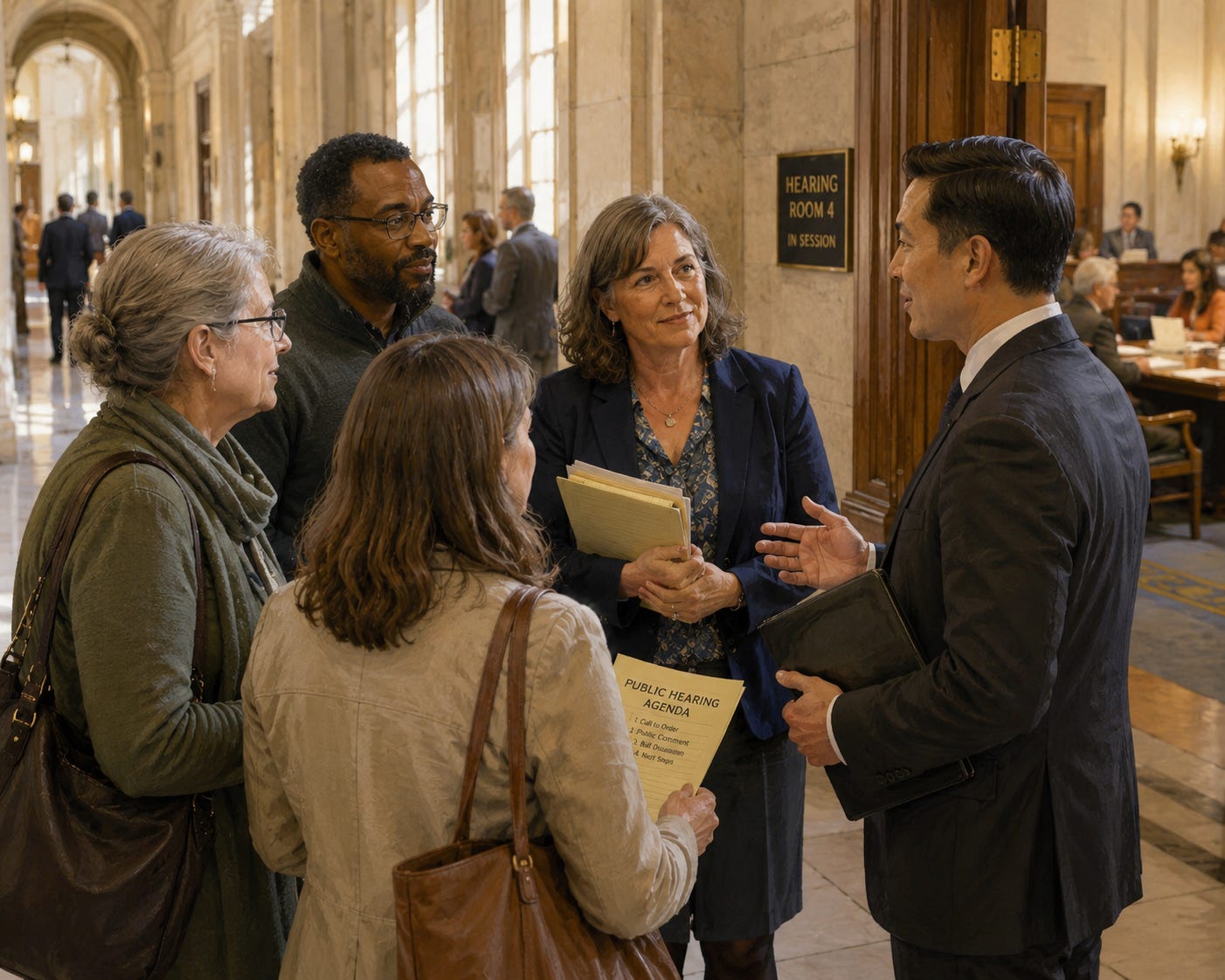
We hear so much about what’s going on in Washington, D.C.
That makes sense. Presidents dominate the news. Congress fights, stalls, performs, negotiates, and sometimes even legislates. Federal courts issue decisions that can change the country.
But a lot is also going on in the “other Washington”—this Washington, the state: the home of Costco, Mount St. Helens, Puyallup, and Pearl Jam.
Washington state government may not command the same national attention, but it shapes much of daily life here: schools, roads, elections, housing, healthcare, policing, courts, environmental protection, labor standards, public records, consumer protection, and the power of cities and counties.
And it does not matter only when the Legislature is in session or when candidates are on the ballot. State government operates all year. So should citizen attention.
During session, bills move quickly
Washington’s Legislature meets in Olympia for a few intense months each year, starting in January. In odd-numbered years, lawmakers meet in a longer session. In even-numbered years, they meet in a shorter one.
During those sessions, bills move quickly. Hearings are held. Amendments are made. Budgets are written or adjusted. Laws are passed, blocked, weakened, strengthened, or quietly buried.
I learned some of this years ago, when I was assigned for one legislative session to help lobby for the local government agency where I worked. In Olympia, I worked with the main lobbyist and consultants. I attended hearings, met with legislators, watched the process up close, and learned a bit about how much happens outside the speeches and headlines.
I did not come away thinking lobbying was my calling. Too much of it seemed to happen in actual lobbies, among people more comfortable working the room than I was. My introvert self was not exactly built for that sport. Writing is my forte.
But I did come away understanding this more clearly: State government is complicated because real life is complicated. Legislators have to weigh many needs, costs, consequences, and trade-offs when writing, revising, and voting on bills.
Lobbyists, advocates, and citizens can help by bringing concrete needs and concerns into the process. That might not simplify the work, but it can help lawmakers see how proposed legislation would affect real people and real communities.
That does not mean everyone has to become a lobbyist. Most of us will not. Most of us should not have to. But we do have to pay attention before decisions are final.
That is one important time to pay attention. But it is not the only time. Government does not stop governing when we stop watching.
Outside the legislative session, agencies write rules, programs are administered, budgets are carried out, courts issue rulings, boards and commissions meet, local governments implement state laws, and public officials keep making choices long after the campaign signs come down.
Where theory turns into practice
Citizens do not lose their voice when the Legislature adjourns. They can still act:
When a law passed in Olympia becomes a rule written by an agency, citizens can comment on the proposed rule, ask questions, and explain how it would affect real people and real communities.
When a budget decision becomes a service funded or not funded in a county, school district, health program, ferry system, court, or public works department, citizens can ask how the money is being used, what is missing, and who is being affected.
When a campaign promise becomes a vote, a silence, a hearing, a staff decision, or a missed opportunity, citizens can follow up with the officials who made that promise and ask what happened.
When state agencies, boards, and commissions meet outside the legislative session, citizens can attend, submit comments, request records, and bring concerns before decisions become routine.
When local governments carry out state laws and budgets, citizens can show up where those decisions become visible—at city councils, county commissions, school boards, port commissions, public utility districts, and public meetings closer to home.
That is where people often experience government most directly—not as a theory, but as a road, a classroom, a ballot, a permit, a utility bill, a court date, a public meeting, a ferry schedule, a park, a clinic, or a missing service.
Elections are one door into state power
This year, legislative elections add another reason to pay attention.
Here in the 24th Legislative District, both state House seats are on the ballot, as usual. One race includes an incumbent. Longtime Rep. Steve Tharinger is vacating the other. That means voters are not only choosing names on a ballot. We are choosing what kind of state representation we expect.
What should our representatives understand about rural communities, small cities, tribes, housing, healthcare, ferries, forests, schools, climate, local journalism, public safety, and the cost of living? What will they do when the national noise fades and the state work begins?
Those questions matter before the election. They matter after it, too.
The practical point is simple
Citizens can do more than vote every few years and hope for the best:
We can follow bills during the legislative session.
We can contact our legislators before a bill is drafted, while it is moving, and after it passes. We can testify in person or remotely.
We can submit written comments and ask that our position be recorded.
We can follow state agencies when they propose rules.
We can watch what statewide elected officials do with the authority voters gave them.
We can support advocacy groups that track issues more closely than any one person can.
Federal politics will keep demanding attention, too. Some of that attention is necessary. Washington, D.C., has enormous power. Presidential actions matter. Congressional failures matter. Federal court rulings matter.
But national politics can also become a trap. It can train us to stare at distant power while overlooking power closer to home. I see that in myself, unfortunately. It can make us feel helpless when we are not.
It can make government seem like something that happens somewhere else, to someone else, beyond our reach.
The other Washington is not somewhere else
It is Olympia. It is our legislative district. It is our county courthouse, city hall, school board, port commission, public utility district, and local ballot.
It is the state agency writing rules, the committee taking testimony, the budget line that funds a program, the official who answers or does not answer a public concern.
State government can protect rights or restrict them. It can strengthen democracy or weaken it. It can fund services or starve them. It can help communities solve problems or leave them to struggle alone.
So yes, keep an eye on Washington, D.C. But do not forget the other Washington.
It is closer to home. And closer to our reach.
Related resources
Washington State Officials and Key Departments
A guide to contacting elected officials, tracking legislation, and advocating for what matters
Local Government and Community Action
Guides for understanding and influencing local government