
🟧 Social Safety Net and Economic Security
A guide to organizations strengthening the social safety net for individuals, families, and communities.

A heartbreaking reminder of what’s at stake
What’s happening inside Washington’s child-welfare system, as reported in this Seattle Times investigation, is deeply disturbing — and a call for closer attention from activists, reporters, and anyone concerned with protecting vulnerable children.
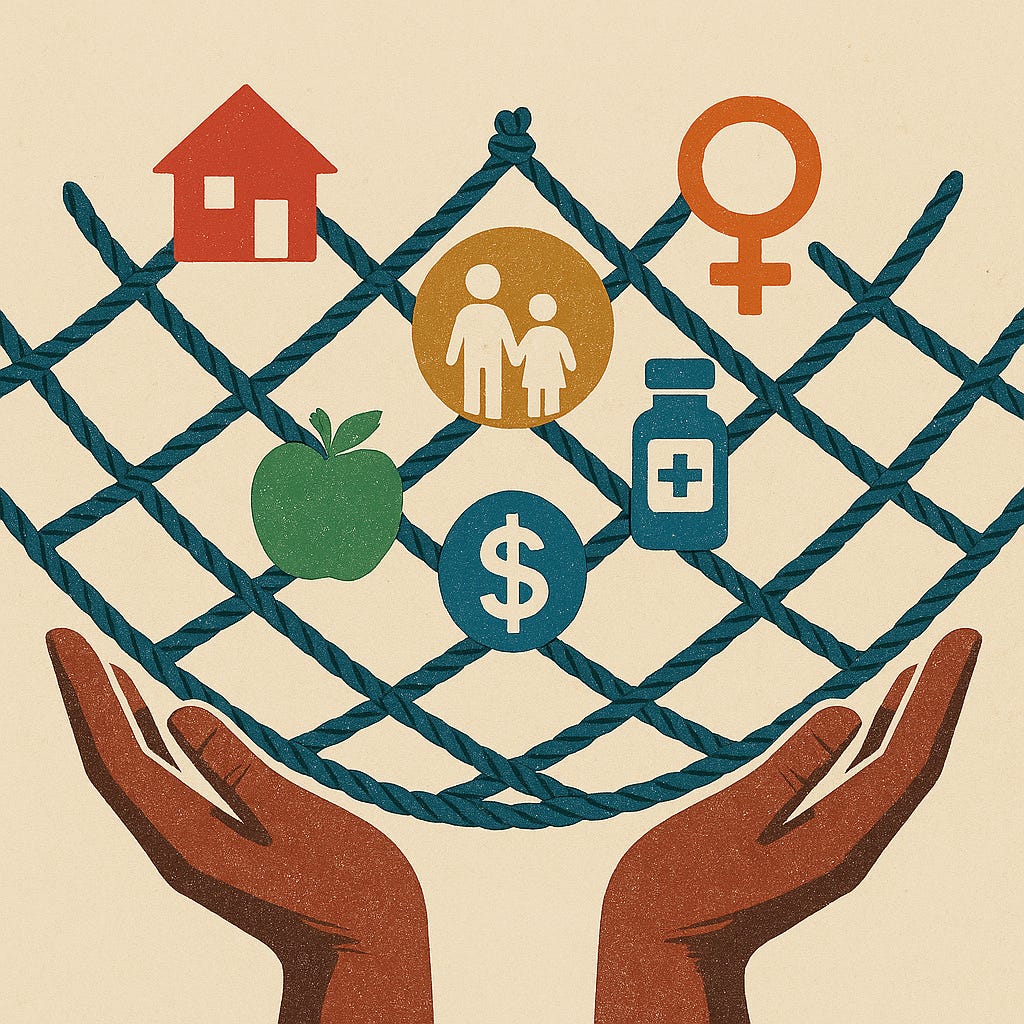
The social safety net includes public programs and community support that protect people from poverty, hunger, homelessness, and economic insecurity. These organizations — including a few in Washington state — provide research, policy advocacy, legal action, and activist resources to ensure essential benefits reach the people who need them.
Top Advocacy Organizations
Center on Budget and Policy Priorities (CBPP)
One of the nation’s most influential anti-poverty research and advocacy organizations, driving federal and state policies that strengthen SNAP, Medicaid, housing support, and income security.
National Low Income Housing Coalition (NLIHC)
The leading national advocate for affordable housing and homelessness-prevention policy.
Washington Low Income Housing Alliance (WLIHA)
A powerful statewide housing-justice advocacy group advancing renter protections, affordable housing funding, and anti-poverty legislation in Washington.
Feeding America — Policy & Advocacy
Drives national advocacy to strengthen SNAP, WIC, school meals, and federal anti-hunger programs. Washington state office
National Employment Law Project (NELP)
Advocates nationally for stronger unemployment insurance, wage protections, and worker economic security.
Children’s Advocacy Institute (CAI)
A leading national voice for child-welfare reform, CAI works to strengthen legal protections, oversight, and accountability in state and federal systems serving vulnerable children.
Washington Economic Justice Alliance (WEJA)
A statewide coalition advancing long-term anti-poverty structural reforms aligned with Washington’s 10-Year Plan to Dismantle Poverty.
Children’s Defense Fund (CDF)
A leading national advocate for child poverty reduction, nutrition, health care access, and family economic stability.
National Alliance to End Homelessness (NAEH)
Influences federal policy, provides research, and partners with states and cities to advance proven strategies to end homelessness.
Supports national and state advocacy to strengthen local anti-poverty systems and community action agencies. Washington state office
Office of the Family & Children’s Ombuds (OFCO)
Washington state’s independent watchdog for the child-welfare system, investigating complaints, reviewing child fatalities and near-fatalities, and recommending systemic reforms to improve safety and accountability.
Partners for Our Children (P4C)
A Washington-based research and policy organization advancing data-driven reforms to strengthen the state’s child-welfare system.
The nation’s largest Latino civil-rights and economic-justice organization, advocating for equitable access to benefits, housing, health care, and worker protections.
Top Issues in Strengthening the Social Safety Net
Poverty Prevention: Expanding policies that lift individuals and families out of poverty and reduce long-term economic hardship.
Affordable Housing: Increasing access to stable, affordable homes and preventing eviction and homelessness.
Food Security: Ensuring reliable access to nutritious food through strong federal and state nutrition programs.
Affordable Health Care: Improving access to medical care, mental health services, and preventive treatment.
Child Safety & Family Support: Strengthening child-welfare systems with better oversight, prevention services, and support for families facing poverty, addiction, or housing instability.
Unemployment Protection: Strengthening unemployment insurance and job-training systems during economic disruptions.
Income Support: Improving access to Social Security, SSI, TANF, and refundable tax credits that stabilize household income.
Child & Family Support: Expanding childcare subsidies, child tax credits, and family-stability services.
Disability Services: Protecting and expanding disability benefits and community-based support.
Elder Economic Security: Supporting programs addressing housing, food, health, and income challenges for older adults.
Equitable Access: Removing cultural, linguistic, digital, and bureaucratic barriers that prevent eligible people from accessing services.
If this resource resonates with you, please share it with friends.
Get new posts from Plainly, Garbl delivered to your inbox.