

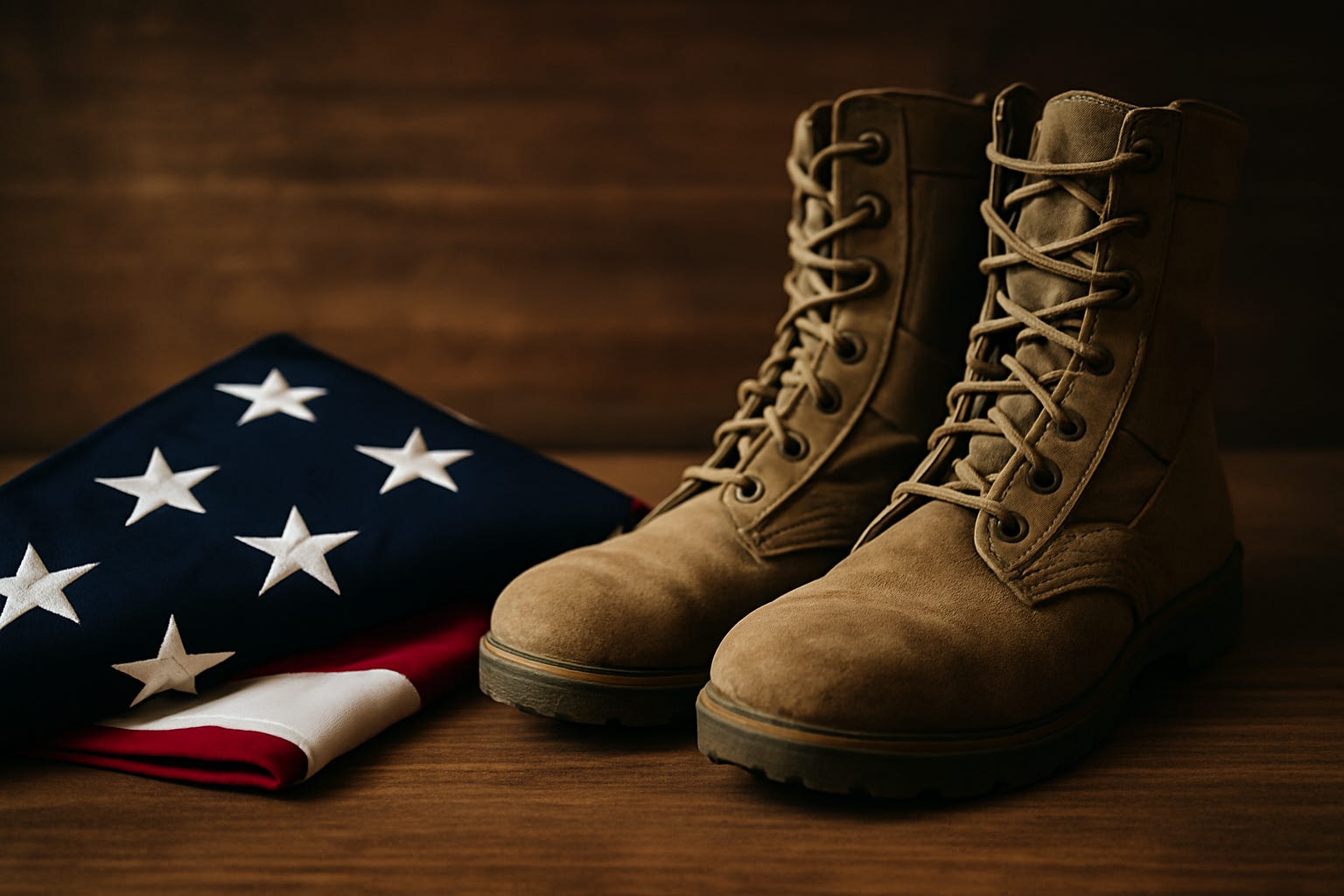
As the United States again faces getting involved in still another war, I offer this list as a resource for reflection and accountability.
I compiled this list on Memorial Day 2025 to review the military conflicts the U.S. fought during my lifetime, beginning with the Korean War. It includes their purpose, the cost in lives, and whether they were formally declared by Congress, as required by the U.S. Constitution.
As we remember the lives lost in U.S. wars, it’s also worth asking how and why we go to war—and who gets to decide.
None of these wars—not Vietnam, not Iraq, not Afghanistan—were declared under the constitutional standard. All were launched under presidential orders, congressional authorizations, or both.
In an age of growing executive power and diminishing congressional oversight, these questions matter, not just as history but also as a guide for how we shape the future.
Korean War
Years: 1950–1953 (U.S. involvement continued through 1963 for support and stabilization)
Primary Location: Korean Peninsula (North Korea and South Korea)
U.S. Military Fatalities: 36,634 (combat-related), plus 2,830 noncombat deaths
Wounded in Action: 103,284
Cause/Purpose: To repel the invasion of South Korea by North Korea and contain the spread of communism under the Truman Doctrine.
Result: An armistice was signed in 1953, ending active hostilities. Korea remained divided along the 38th parallel, and no formal peace treaty was signed. South Korea remained independent and eventually prospered, while North Korea became increasingly isolated.
Presidents: Harry S. Truman, Dwight D. Eisenhower
Was it declared by Congress? ❌ No
Basis for military action: Military intervention was launched under a United Nations Security Council resolution and President Truman’s executive authority.
Note: Often referred to as a "police action" at the time, though it involved full-scale war and significant casualties.
Vietnam War
Years: 1955–1975
Primary Location: Vietnam (with operations extending into Laos and Cambodia)
U.S. Military Fatalities: 58,220
Wounded in Action: 153,372
MIA: 1,584
POW: ~766–778
Cause/Purpose: To stop the spread of communism in Southeast Asia under the containment doctrine; support South Vietnam against North Vietnam and the Viet Cong.
Result: The U.S. withdrew in 1973; South Vietnam fell to North Vietnam in 1975, resulting in a unified communist Vietnam. The war left lasting trauma at home and abroad and is widely viewed as unsuccessful in achieving U.S. strategic goals.
Presidents: Dwight D. Eisenhower, John F. Kennedy, Lyndon B. Johnson, Richard Nixon
Was it declared by Congress? ❌ No
Basis for military action: The Gulf of Tonkin Resolution (1964) authorized the president to use force without a formal declaration of war.
Note: The war spurred widespread protest and was later seen as a significant example of unchecked executive power during wartime.
Persian Gulf War (Operation Desert Shield/Desert Storm)
Years: 1990–1991
Primary Location: Kuwait and Iraq (mainly southern Iraq)
U.S. Military Fatalities: 295 (147 hostile, 148 nonhostile)
Wounded in Action: 467
Cause/Purpose: To expel Iraqi forces from Kuwait following Iraq’s invasion, and to protect oil supplies and regional stability.
Result: A swift and decisive U.S.-led coalition victory liberated Kuwait in early 1991. Although military objectives were achieved, Saddam Hussein remained in power, contributing to later conflict.
President: George H.W. Bush
Was it declared by Congress? ❌ No
Basis for military action: Congress passed a joint resolution authorizing the use of military force.
Note: The war was praised for its speed and effectiveness but criticized by some for not pursuing regime change.
Operation Iraqi Freedom
Years: 2003–2010
Primary Location: Iraq
U.S. Military Fatalities: 4,419 (3,482 hostile, 937 nonhostile)
Wounded in Action: 31,993
Cause/Purpose: To remove Saddam Hussein from power; eliminate alleged weapons of mass destruction (WMDs); and combat terrorism.
Result: Saddam Hussein was overthrown, but no WMDs were found. The conflict led to a prolonged insurgency, political instability, and the emergence of ISIS. U.S. troops withdrew in 2010 amid ongoing unrest.
Presidents: George W. Bush, Barack Obama
Was it declared by Congress? ❌ No
Basis for military action: Congress passed the Authorization for Use of Military Force Against Iraq (2002).
Note: The rationale for the invasion was later discredited, and the war remains controversial for its human, financial, and geopolitical costs.
Operation Enduring Freedom
Years: 2001–2014
Primary Location: Afghanistan (also included counterterrorism operations in the Philippines, Horn of Africa, and other regions)
U.S. Military Fatalities: 2,354 (1,847 hostile, 506 nonhostile)
Wounded in Action: 20,149
Cause/Purpose: Response to the Sept. 11, 2001, terrorist attacks; to destroy al-Qaeda and remove the Taliban regime that provided safe haven.
Result: The Taliban was quickly removed from power, and al-Qaeda was weakened. However, the Taliban regained control in 2021 after the U.S. withdrew. The war became the longest in U.S. history and left Afghanistan unstable.
Presidents: George W. Bush, Barack Obama
Was it declared by Congress? ❌ No
Basis for military action: Congress passed the Authorization for Use of Military Force (2001), permitting military action against those responsible for 9/11.
Note: The war shifted from targeted counterterrorism to nation-building, leading to changing objectives and public fatigue.
Global War on Terror
Years: 2001–present
Primary Locations: Afghanistan, Iraq, Syria, Pakistan, Yemen, Somalia, and other countries
U.S. Military Fatalities: 7,008 (includes deaths from Iraq, Afghanistan, and other related operations)
Wounded in Action: 50,422
Cause/Purpose: To combat terrorism and insurgent groups (al-Qaeda, ISIS) perceived as threats to U.S. national security.
Result: Several terrorist leaders and networks have been eliminated, but regional instability and humanitarian crises persist. Drone strikes, special operations, and covert campaigns continue to spark debate.
Presidents: George W. Bush, Barack Obama, Donald Trump, Joe Biden, Trump
Was it declared by Congress? ❌ No
Basis for military action: Continued use of the 2001 AUMF, interpreted broadly to authorize operations in multiple countries.
Note: The Global War on Terror remains undefined in scope and duration, raising ongoing questions about transparency, effectiveness, and congressional oversight.
Constitutional Context: Declarations of War vs. Authorizations
Under the U.S. Constitution, Article I, Section 8, gives Congress the sole power to declare war. However, in practice, the United States has frequently engaged in military conflicts without formal declarations of war, relying instead on presidential authority or congressional authorizations for the use of military force (AUMFs).
✅ When did Congress declare war?
The last formal declarations of war were during World War II:
Japan – Dec. 8, 1941
Germany and Italy – Dec. 11, 1941
Bulgaria, Hungary, and Romania – June 1942
🔎 Summary
🟥 None of the wars listed in this document—from the Korean War to the Global War on Terror—were formally declared under the constitutional standard.
🟨 All were fought under congressional authorizations, executive decisions, or both—prompting ongoing debate over the balance of power between Congress and the president in committing the nation to war.
🟪 Global Peace and Security
This section of Plainly, Garbl highlights advocacy groups committed to nonviolence, diplomacy, and responsible global engagement. Explore ranked guides to organizations focused on nuclear disarmament, peacebuilding, human rights, refugee protections, and alliances that prevent war and authoritarian expansion. These groups work to reduce military dominance, protect civilians, and build a more just and peaceful world.
Peace, Defense Spending, and Nuclear Arms Control
Human Rights and Global Sovereignty
Ukraine, Democratic Values, and Global Alliances
Thank you for doing this excellent work, Gary.