
✍️ Greenland Is Not for Sale
How history, Indigenous presence, and Arctic reality expose the annexation myth

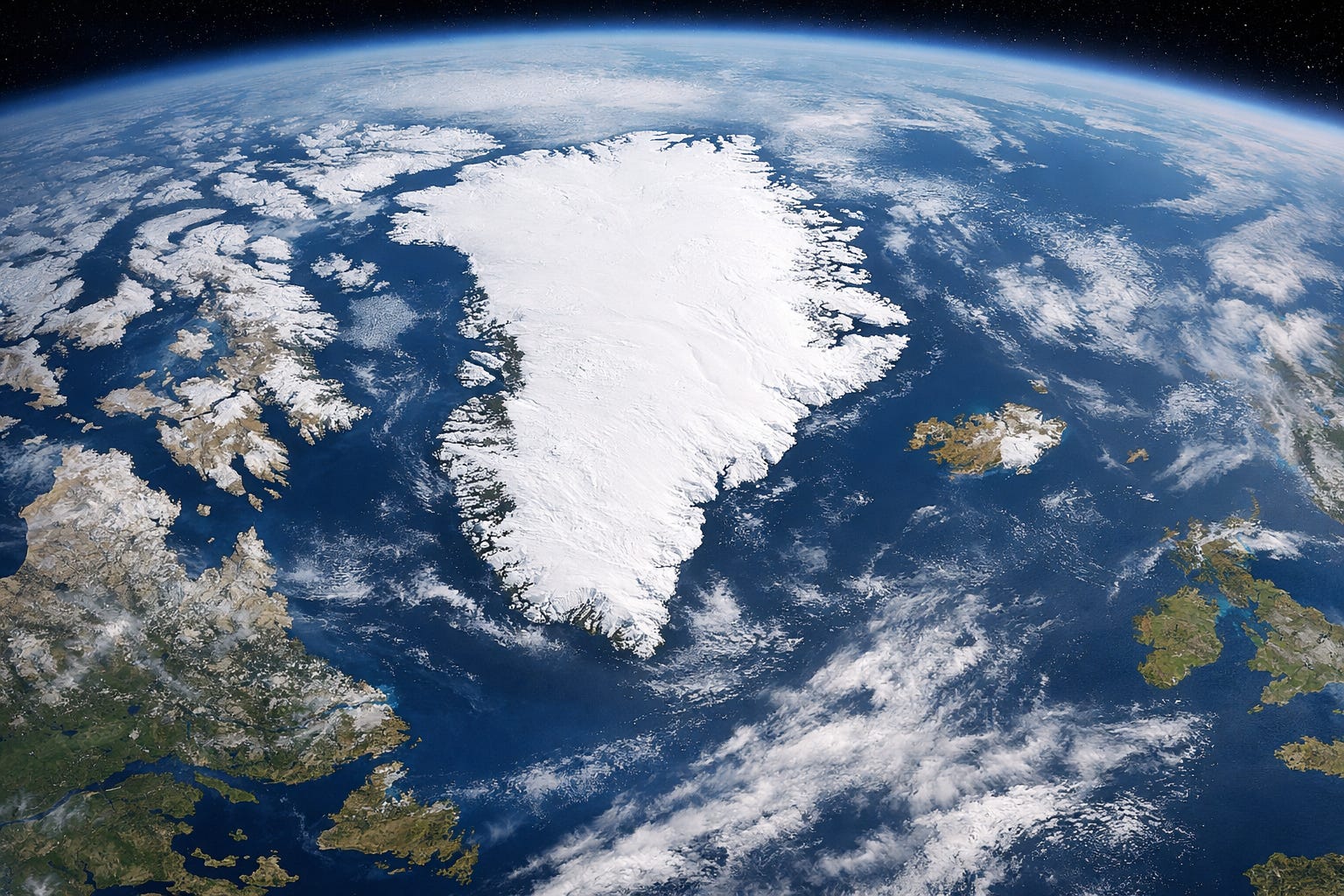
Like many Americans, I hadn’t thought much about Greenland until recently.
Spending several weeks this fall in Canada’s Maritime provinces sharpened my curiosity. They’re surrounded by reminders of how closely geography, history, and security are linked in the North Atlantic. And Greenland continued to show up in the news, especially with renewed talk of U.S. annexation.
That talk makes little sense. To see why, here’s what I’ve learned to help understand who lives in Greenland, how it got to its current political status, and why global attention has suddenly intensified.
Greenland was never empty
Greenland is often described as vast, remote, or sparsely populated—language that subtly suggests vacancy. It never was.
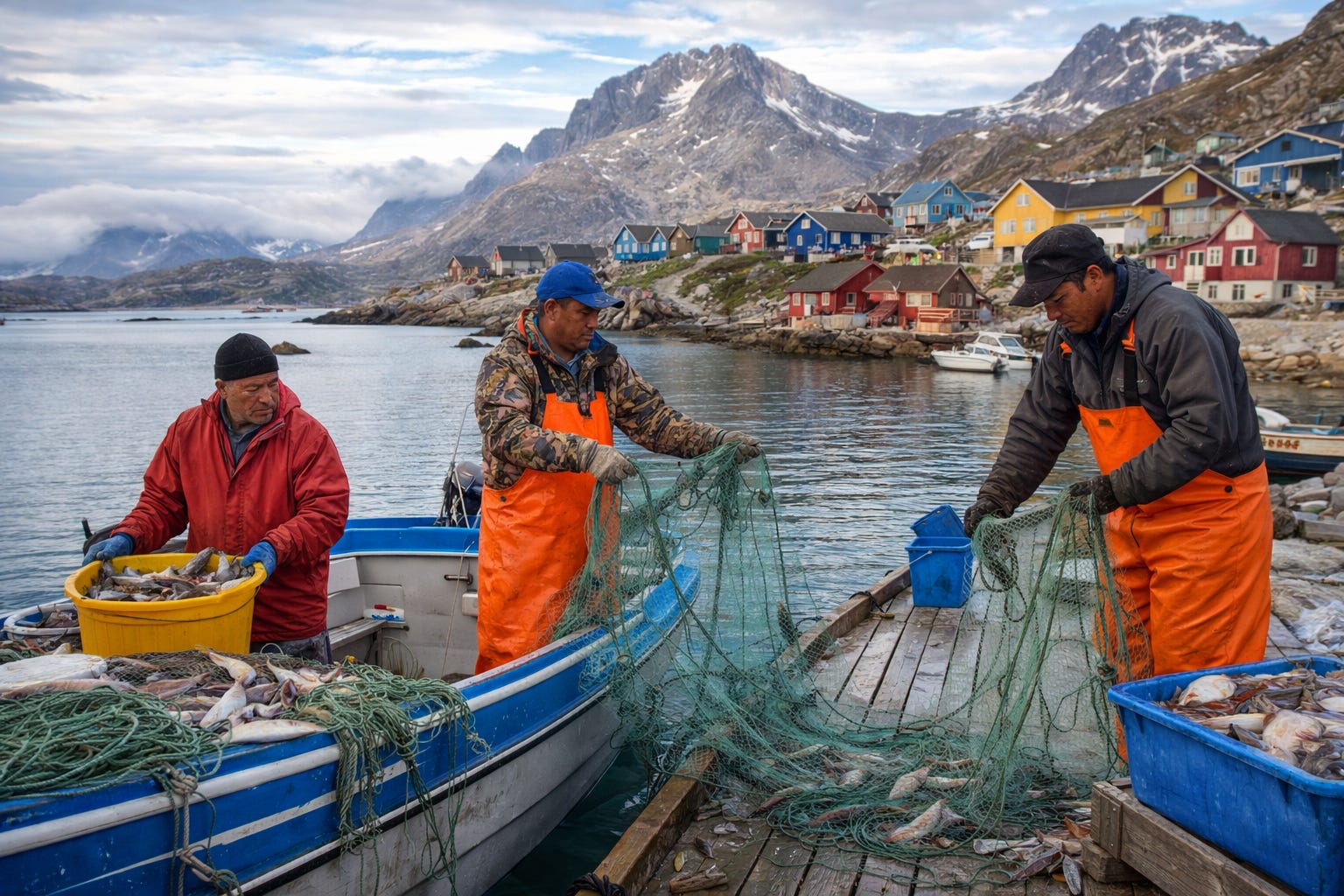
Inuit ancestors of today’s Kalaallit people arrived in Greenland more than 4,000 years ago. Over centuries, they developed cultures adapted to extreme Arctic conditions: sea-ice travel, hunting, navigation, and deep ecological knowledge. Survival depended on cooperation, restraint, and respect for land and sea—values that continue to shape Greenlandic society.
This Indigenous presence is not a historical footnote. It is the foundation of modern Greenland.
European arrival—temporary and incomplete
Around 985 CE, Norse settlers led by Erik the Red established small farming communities in southern Greenland. Those settlements lasted several centuries, then disappeared, likely due to climate cooling, isolation, and failure to adapt.
Inuit societies endured.
That contrast matters. Greenland’s history is not a simple story of European discovery followed by continuous control. It is a much longer Indigenous story, briefly interrupted by European settlement that did not last.
From Danish rule to self-government
Denmark reasserted control over Greenland in the 1700s and eventually governed it as a colony. That relationship changed dramatically in the 20th century.
Key milestones tell the story:
In 1953, Greenland became part of the Kingdom of Denmark.
In 1979, it gained Home Rule.
In 2009, the Self-Government Act transferred authority over nearly all internal affairs—including natural resources—to Greenland.
Today, Greenland governs itself. Denmark remains responsible for defense and foreign policy, and Greenlanders are Danish citizens. At the same time, national identity is overwhelmingly Inuit, and discussions about eventual independence remain active.
This is not colonial stasis. It is decolonization in progress.
The United States and Greenland: cooperation, not control
The U.S. relationship with Greenland grew out of World War II, when the U.S. helped defend the island after Nazi Germany occupied Denmark. During the Cold War, Greenland became strategically important for early warning systems and North Atlantic security.
That cooperation continues today. The U.S. operates Pituffik Space Base under long-standing agreements with Denmark, with Greenland’s involvement. The base supports missile early-warning, space surveillance, and Arctic monitoring.
The distinction matters: The U.S. operates in Greenland not because it owns the territory but because it was invited to do so. Modern security depends on agreements and alliances, not annexation.
A reality check on annexation: why this time is different
Talk of U.S. annexation of Greenland has surfaced occasionally in the past and was often brushed aside as unserious. This time, it is different.
What once sounded like an offhand remark has hardened into something more explicit: a public suggestion framed as leverage or demand. That shift has made the issue urgent, not hypothetical, and has prompted unusually direct responses from Greenlandic leaders, Denmark, and other NATO partners.
Annexation ignores Greenland’s Indigenous population, its self-governing authority, and Denmark’s sovereignty. It also misunderstands how modern security works. The U.S. already has what it needs in Greenland through cooperation, consent, and NATO partnerships.
Why annexation fails and why speaking out matters
Annexation would not simplify anything. It would undermine trust, destabilize alliances, and revive a colonial mindset that treats Indigenous homelands as strategic blank spaces. In the Arctic, where cooperation matters more than force, that approach would weaken U.S. credibility, not strengthen it.
What happens next will depend less on rhetoric from the White House than on response elsewhere. Greenlandic leaders have already rejected annexation outright. Denmark has been unambiguous.
And within NATO, annexation cuts directly against the alliance’s core principles of sovereignty and consent.
In systems built on alliances rather than empires, boundaries are enforced when citizens, elected officials, and partners speak clearly and early. Silence is what turns trial balloons into precedents.
Why the Arctic suddenly matters so much
What has changed is not Greenland. It is the world around it.
Climate change is reshaping the Arctic faster than almost anywhere else on Earth. Sea ice is retreating, making new shipping routes more viable. Russia has expanded its Arctic military footprint. China, calling itself a “near-Arctic state,” is seeking influence through investment and diplomacy.
Greenland sits near critical North Atlantic sea lanes and plays a central role in Arctic monitoring. It is also on the front lines of climate impacts that the rest of the world is only beginning to confront.
That combination—geography, security, and climate—explains the surge of attention. It does not justify reckless ideas about ownership.
The bottom line
Greenland is not a prize to be claimed. It is a homeland, a self-governing society, and a partner in Arctic stability.
The U.S. interest in Greenland is legitimate when it is grounded in respect for Indigenous people, support for self-determination, and cooperation through Denmark and NATO. Annexation talk is not strategy. It is noise, and it distracts from the serious work the Arctic demands.
Whether that distinction holds will depend on whether people inside the U.S., as well as across the alliance, continue to treat boundaries as real rather than abstractions.
Learn more about Greenland
For readers who want to explore Greenland beyond the headlines, these accessible sources offer helpful starting points.
Visit Greenland—Articles on Culture & Society
An official Greenlandic source with accessible articles on history, culture, language, and daily life.
Council on Foreign Relations—Arctic
Plain-language analysis of Greenland’s strategic role and Arctic geopolitics.
The Arctic Institute
Independent analysis focused on Arctic governance, Indigenous perspectives, and international cooperation.
Greenland within the Kingdom of Denmark—Prime Minister’s Office
An official overview of Greenland’s political status and self-governing authority.
Greenland—Wikipedia
A comprehensive overview of Greenland’s history, culture, governance, and global role. Useful as a starting point alongside official and analytical sources.
If this commentary resonates with you, please share it with friends.
Get new posts from Plainly, Garbl delivered to your inbox.