
✍️ Earth Day Is a Reminder, Not a Ritual
Its value lies in how it shapes what we do the rest of the year.

In the spring of 1970, I was a college sophomore when the first Earth Day on April 22 sharpened my growing awareness that air pollution, damaged waterways, and unchecked growth were not simply the price of progress.
Earth Day helped change how we understood our relationship with the natural world.
What began as a nationwide day of teaching, organizing, and public action became one of the defining civic moments in modern American life.
It helped move environmental stewardship from the margins into the mainstream. It laid the groundwork for laws and institutions that still shape our daily lives, from clean air and water protections to the U.S. Environmental Protection Agency.
Over time, that shift became part of my own working life.
For three decades, I worked in communications for two public agencies serving King County, Washington: Metro Transit and the regional wastewater treatment utility.
Then, as now, I saw both functions as part of the same environmental mission.
Wastewater treatment protects Puget Sound, Lake Washington, and other local waterways by controlling pollution and improving water quality. It reinforces the link between public infrastructure and environmental health.
Transit reduces dependence on cars, helping to improve air quality. It makes urban, suburban, and rural life more sustainable and connected.
At the time, much of my work felt practical and service-oriented rather than overtly “environmental.”
But that is exactly the point Earth Day still teaches.
Environmental protection is not only activism, legislation, or symbolic gestures once a year.
It is also the steady, often invisible work of building and maintaining the public systems that make healthier communities possible.
It is transit that gives people alternatives to driving. It is treatment plants that keep toxins out of marine waters. And it is land-use decisions that protect habitat and balance growth with stewardship.
Just as important, it is citizens taking daily personal actions to protect, preserve, and enhance our environment—from recycling their household and yard waste to ending use of toxic garden products to riding the bus, carpooling, bicycling, or walking to work and school.
My experience in local government reinforced for me something Earth Day has always tried to teach: Environmental stewardship is not separate from daily life. It is daily life.
It is the water we drink, the shorelines we treasure, the forests that define this region, and the climate patterns that increasingly shape wildfire seasons, drought, fisheries, and storms.
Earth Day 2026 calls on communities worldwide to begin environmental action on Saturday, April 18, and carry that momentum through the following week, including Earth Day itself on April 22. Scheduled events and activities vary by community.
This year’s Earth Day theme, Our Power, Our Planet, reminds us that sustaining environmental protections still depends on people, institutions, and communities working together. That continuing work affects the cost of living, public health, infrastructure reliability, and long-term stability.
Lasting change rarely starts in Washington, D.C., even when federal policy matters deeply.
It starts in communities.
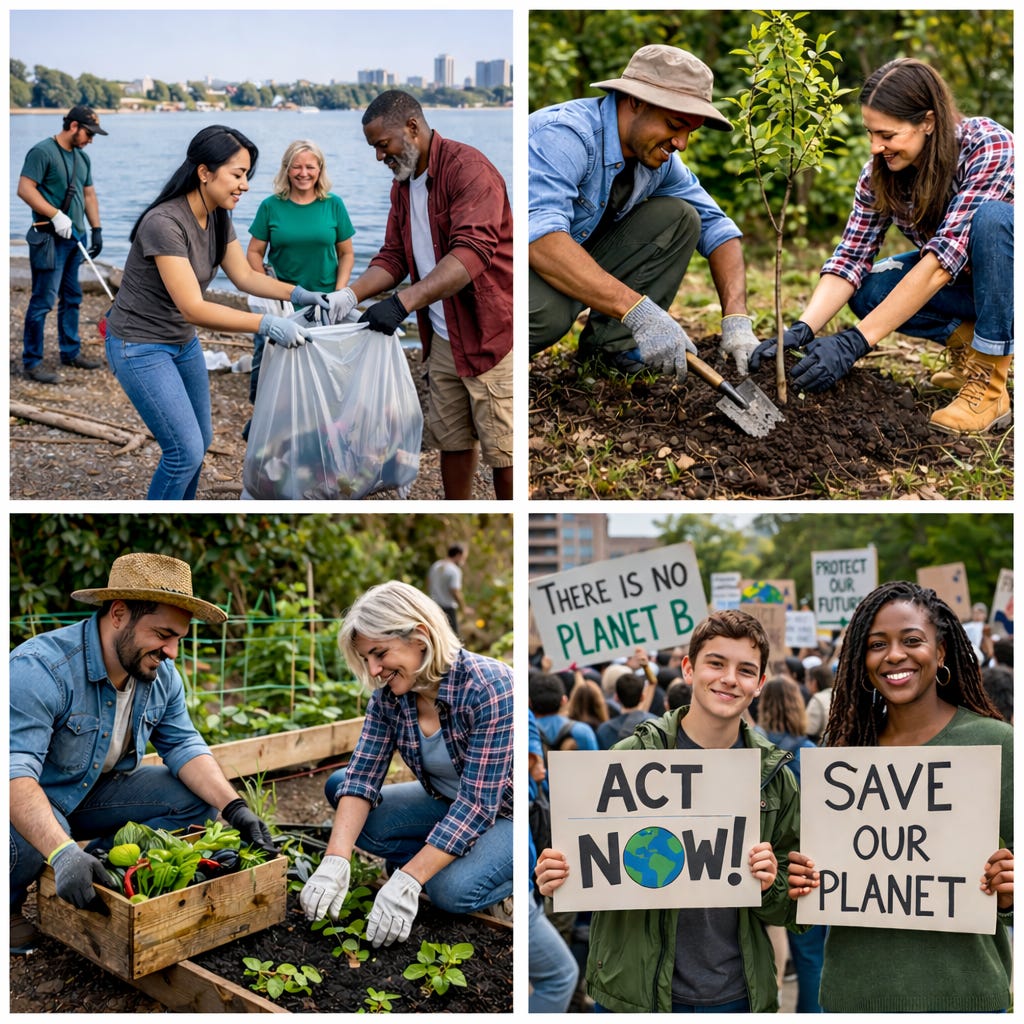
It starts when people show up for a shoreline cleanup, support local land-use decisions that protect habitat, reduce waste at home, advocate for renewable energy, or simply refuse to look away from the long-term consequences of short-term convenience.
Here in the Pacific Northwest, that responsibility is especially visible.
We live close to what we are trying to protect: marine waters, forests, farmland, salmon habitat, and the climate patterns that increasingly shape wildfire seasons, drought, fisheries, and storms.
Fifty-six years after that first Earth Day, the lesson still holds: Public priorities can change when enough people decide they must.
Much of the most lasting environmental work is not dramatic.
It is built into the systems we rely on every day—and how we work to improve them through citizen action and involvement.
That is what makes Earth Day a reminder, not a ritual.
Related commentary: My follow-up piece, “Protect What Still Protects Us,” looks at why environmental protection needs to stay visible and defended after Earth Day—not just through restoration but through laws, agencies, and clean air, clean water, public lands, and climate safeguards.
Take action year-round
Looking for ways to turn Earth Day concern into year-round action? Explore these Plainly, Garbl resources.
🧭Advocacy Groups:
🗺️ Local Government and Community Action
Also in college, I remember that day quite clearly. The presentations and events held that day on campus influenced me and many others. Thank you Gary for highlighting the behind the scenes everyday work that makes our environment and lives more liveable and sustainable.
In the 70s and 80s we lived in the Snoqualmie Valley. Our Tolt Community Club hosted huge Earthday Festivals. We organized recycle collection at school for; aluminum, glass, appliances, tires, toxic chemicals collected by King County Waste, educational recycle displays, with explanations handouts, riparian zone plantings with school kids , scouts and 4H, using native plants supplied by King County Conservation District . PSE and Weyerhaeuser donated and supported with funding, free electricity saving devices and free trees for every child . It was a huge effort but educated residents on healthy farms and rivers and netted tons of recyclables that would have ended up in landfills .