
🟦 Conflict Resolution and De-escalation
A guide to organizations working to prevent conflicts from escalating into violence in communities, institutions, and public life.

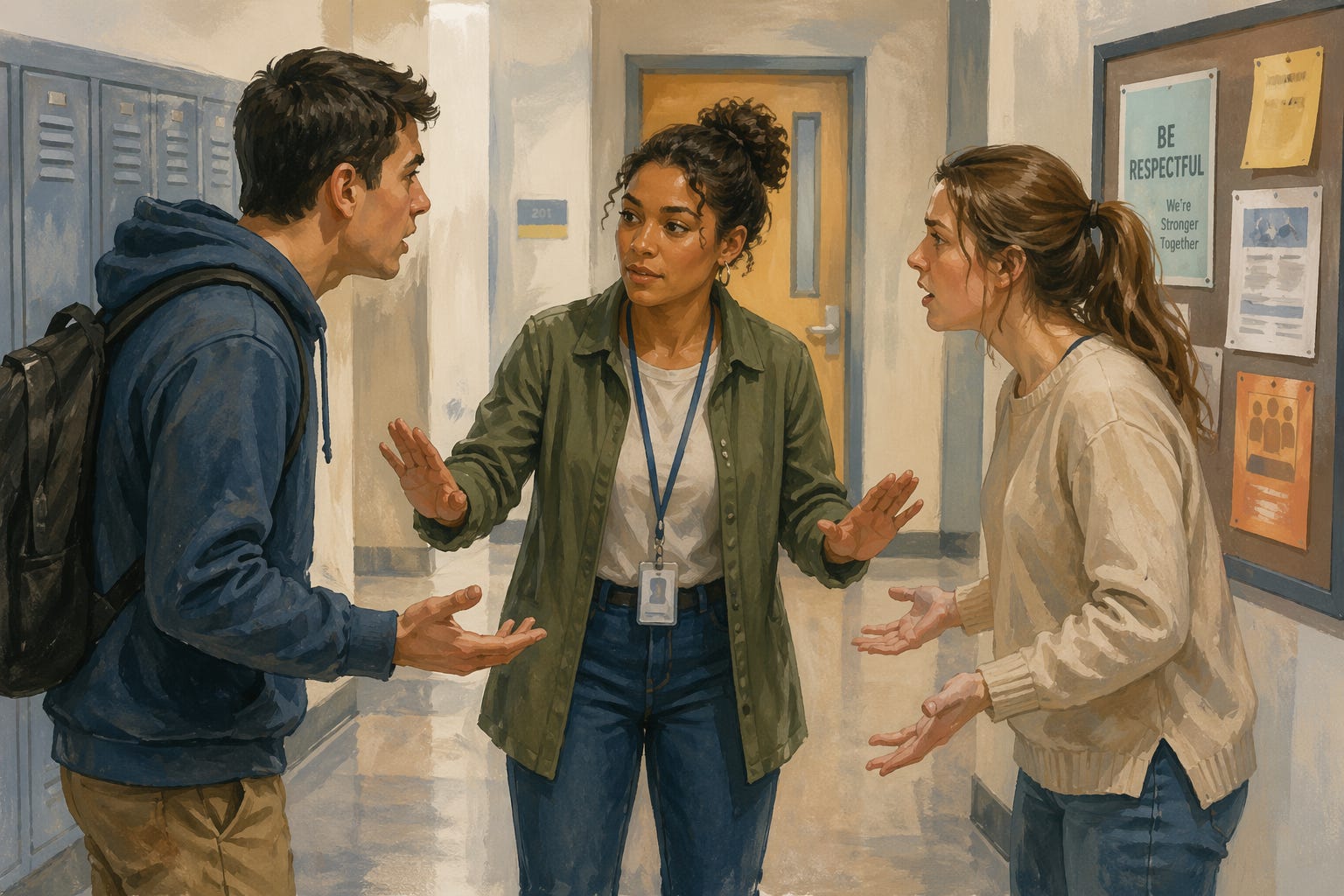
This guide is part of a series on Violence Prevention and Community Safety. Check its Introduction for an overview of the series, its goals, and other guides in the series.
Conflict is part of everyday life. It shows up in families, schools, workplaces, communities, and public life. Most conflicts don’t begin with violence, but they can move in that direction when emotions rise, positions harden, and people stop listening to one another.
Not every conflict becomes violence. What matters is how people respond and whether escalation is interrupted.
The organizations in this guide focus on that moment. Some work directly in high-risk situations to prevent harm. Others help people resolve disputes before they escalate.
Many teach practical skills—communication, mediation, and intervention—that increase the likelihood of nonviolent responses.
Together, they offer a different approach to safety: not just reacting to violence after it occurs, but preventing it by strengthening relationships, accountability, and community-based solutions.
Direct Intervention and Civilian Protection
Organizations that operate in active or high-risk conflict settings and work to prevent escalation in real time.
Protects civilians in conflict zones using unarmed peacekeepers trained in de-escalation, accompaniment, and community engagement.
Treats violence as a public health issue, using trained community members to interrupt conflicts and prevent retaliation.
Mediation and Community-Based Conflict Resolution
Organizations that help individuals and communities resolve disputes before they escalate.
National Association for Community Mediation
A national network supporting community-based mediation programs that resolve disputes outside the courts.
National Conflict Resolution Center (NCRC)
Provides mediation, training, and conflict resolution services nationwide, with a focus on community, workplace, and civic disputes.
Restorative Justice and Community Safety
Groups focused on repairing harm and reducing future conflict through accountability and dialogue.
Restorative Justice Exchange (RJE)
Promotes restorative justice practices that bring together those affected by harm to repair relationships and prevent recurrence.
Provides tools and training for communities to address violence without relying on police or punitive systems.
Training and Nonviolent Skills Development
Organizations that teach practical skills for de-escalation, communication, and conflict transformation.
Alternatives to Violence Project | Washington affiliate
Offers workshops that teach conflict resolution, communication, and nonviolent responses in prisons and communities.
Center for Nonviolent Communication | Trainer locator
Trains individuals and organizations in communication practices that reduce conflict and build understanding. Available in Washington state.
Dialogue, Peacebuilding, and Systems-Level Change
Organizations working at broader social, political, or international levels to reduce conflict and build sustainable peace.
Works globally to transform conflict through dialogue, media, and community engagement programs.
Develops community-based ways to measure and strengthen everyday conditions that reduce conflict and build peace.
Related Issues
Conflict escalation and de-escalation: Recognizing when disputes are intensifying and using practical skills to reduce the risk of harm.
Community mediation: Helping people resolve disputes through trained, neutral facilitators before conflicts become legal, political, or physical battles.
Restorative justice: Bringing affected people together, when appropriate, to repair harm, accept responsibility, and reduce future conflict.
Unarmed civilian protection: Protecting people in tense or dangerous situations through trained, nonviolent presence, accompaniment, and monitoring.
Violence interruption: Using trusted community members to intervene in conflicts, prevent retaliation, and stop cycles of violence.
School and youth conflict prevention: Teaching young people communication, peer mediation, and problem-solving before conflict becomes violence.
Protest and event de-escalation: Training people to reduce risk at public gatherings, demonstrations, and civic events.
Workplace and organizational conflict: Addressing disputes, bullying, retaliation, and power struggles before they damage people or institutions.
Dialogue across divides: Creating structured conversations among people or groups in conflict to reduce fear, misinformation, and hostility.
Peacebuilding culture: Building habits, institutions, and community norms that make nonviolent responses more likely than retaliation or domination.
How to Get Involved
Not sure where to start? Choose an approach that fits your interests:
Learn and practice: Take a workshop in mediation or nonviolent communication.
Support local programs: Look for community mediation centers or violence prevention efforts in your area.
Volunteer or train: Many organizations offer opportunities to become a facilitator or a conflict-resolution trainer.
Apply it in daily life: Use de-escalation and listening skills in your own relationships and community.
Even small steps—learning a skill, supporting a program, or changing how you respond to conflict—can help prevent harm.
Thank you for sharing this list. Unfortunately for our era, sowing seeds of discord seems to be part and parcel of how many political operatives work. The tRump admin is an obvious case in point, but even locally it's become a standard refrain, 'I'll get in there and fight'. Hearing a politician talk about working 'across the aisle' or finding common ground is rare these days, and they may be written off as 'moderate' and not 'progressive'.